Both graph neural networks and Bayesian networks have been proposed for drug-drug interaction prediction. The papers on each approach tend to be written by their advocates, evaluated on curated benchmark datasets, and optimized for the metric that each architecture handles best. That's not a criticism of the research — it's how computational methods papers work. But it means practicing pharmacovigilance scientists trying to make a tool selection decision are reading advocacy literature, not comparison literature.
This piece is an attempt at the latter. I'll describe what each architecture actually does computationally, where each performs well in the context of real-world FAERS data rather than benchmark conditions, and where each breaks down. I'm going to be direct about the limits of both.
What Graph Neural Networks Are Actually Doing
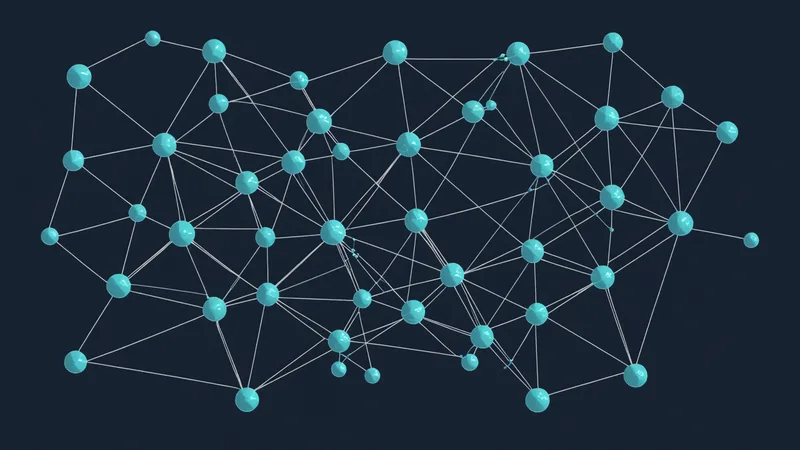
A graph neural network for DDI prediction treats drugs as nodes in a molecular or pharmacological graph and interactions as edges to be predicted. In the most common formulation, each drug node is initialized with a feature vector — typically derived from drug structure (SMILES fingerprints), mechanism of action annotations, protein target binding profiles, or a combination. The GNN then performs iterative message passing: each node aggregates information from its neighbors, updates its own representation, and after several rounds of propagation, the node embedding captures not just the drug's intrinsic properties but its relational context within the graph.
Predicting whether two drugs interact then becomes a link prediction problem: take the embeddings of Drug A and Drug B after propagation, compute a compatibility score through a learned function, threshold it against a decision boundary. The model learns the decision boundary from labeled training data — known interactions and known non-interactions.
For FAERS-based DDI work specifically, the graph isn't molecular — it's a co-reporting graph. Drugs are nodes; cases are the mechanism by which edges get weighted. If Drug A and Drug B co-occur in the same FAERS case reports with a particular adverse event, that co-occurrence pattern contributes to their edge representation. The GNN then operates on this pharmacovigilance graph rather than a molecular one.
Where GNNs Perform Well
GNNs have a genuine advantage on complex polypharmacy signals. When you have cases where 6, 8, or 10 drugs are reported concomitantly, traditional pairwise analysis fragments the signal across dozens of individual drug pairs. The GNN sees the full graph substructure around the adverse event and can identify that a specific drug triplet or quartet is the anomalous pattern, even if no single pair within it achieves conventional disproportionality thresholds.
This is the architecture's structural strength: it naturally handles higher-order dependencies without requiring you to enumerate all possible interaction combinations explicitly. The message-passing mechanism propagates relational context automatically.
GNNs also generalize better to novel drug combinations they haven't seen in training, provided the novel drugs are structurally or mechanistically similar to drugs they have seen. If Drug A is a new kinase inhibitor and the model has seen 40 kinase inhibitors during training, it can make a reasonable embedding for Drug A based on its feature vector and propagate that through the graph.
Where GNNs Break Down
Interpretability is the primary operational problem. A GNN produces a score. It does not produce an explanation that a safety scientist can write into a signal assessment report. "The model assigned a co-reporting anomaly score of 0.87 to this drug triplet" is not a finding — it's an input that still requires a scientist to explain the mechanism, review the underlying cases, and determine whether the score represents a pharmacodynamic interaction, a pharmacokinetic one, a population confound, or a coincidence.
This isn't a fatal limitation — it's a workflow design question. If the GNN is surfacing candidates for human assessment rather than generating assessments autonomously, the interpretability gap is manageable. But teams that go in expecting the model to explain its findings will be disappointed.
GNNs are also computationally heavier to train and require more labeled interaction data to perform well. In FAERS, "labeled" data is itself noisy — the signal-to-noise ratio in spontaneous reporting is not the same as a curated drug interaction database. Overfitting to FAERS reporting patterns rather than genuine pharmacological interactions is a real risk, particularly for drugs with very high report volumes where reporting behavior artifacts dominate the co-occurrence structure.
What Bayesian Networks Are Actually Doing
A Bayesian network represents a joint probability distribution over variables as a directed acyclic graph, where each node is a variable (a drug, an adverse event, a patient covariate) and each edge encodes a conditional dependency. The structure of the graph encodes assumptions about what causes what; the parameters are probability tables learned from data.
For DDI prediction, the most common application is a variant of disproportionality analysis expressed in a Bayesian framework. The Bayesian Confidence Propagation Neural Network (BCPNN) — widely used in the WHO's VigiBase — computes the Information Component (IC) for a drug-event pair, which is essentially a Bayesian estimate of how much the co-occurrence of a drug and an adverse event exceeds what you'd expect under independence. The full Bayesian network extension generalizes this to model multiple drugs and events simultaneously with explicit uncertainty estimates.
Where Bayesian Networks Perform Well
Bayesian networks are significantly more interpretable than GNNs. The probability tables and conditional dependencies can be interrogated directly. When a Bayesian network flags a drug-drug-event combination, you can trace the probability estimate back through the graph to understand exactly what data patterns are driving it and how much uncertainty surrounds the estimate.
This makes Bayesian output far more amenable to signal assessment documentation. A scientist can describe the posterior probability increase in a drug-event association given co-medication with Drug B, cite the case counts that support that estimate, and discuss the prior probability distribution used. Regulators understand this framing. It maps cleanly onto the probabilistic reasoning that pharmacovigilance training already emphasizes.
Bayesian networks are also well-suited to small-n situations. When you have 12 cases of a specific adverse event in a new compound's FAERS report stream, a frequentist PRR is unstable and its confidence interval is nearly uninformative. A properly specified Bayesian model with a reasonable prior (typically derived from background base rates in the full FAERS database) produces a meaningful posterior estimate with explicit uncertainty bounds. That's clinically more useful than an unstable point estimate with a wide CI that gets dismissed.
Where Bayesian Networks Break Down
Structure learning at scale is hard. In a molecular graph, the node count is bounded. In a pharmacovigilance network covering all drugs in FAERS, you have tens of thousands of drug nodes, millions of case-level combinations, and a structure learning problem that is computationally expensive and prone to local optima. Most practical Bayesian network implementations for PV work use simplified structures — often fixed graph topologies based on domain knowledge — which limits their ability to discover unexpected interaction patterns.
For complex polypharmacy cases, Bayesian networks tend to decompose the interaction into pairwise or triplet sub-problems that lose the higher-order structure. This is the mirror image of the GNN's advantage: where GNNs naturally propagate information through complex graph structures, Bayesian networks start to strain as the number of interacting variables grows.
The Practical Comparison on FAERS Data
When we run both architectures against real FAERS data — not benchmark datasets, actual quarterly exports — some consistent patterns emerge.
For signals involving 2-3 drug combinations where the primary suspect and the co-medication are both high-volume products with hundreds of relevant cases, the two methods produce broadly similar rankings. The Bayesian approach tends to produce narrower, more conservative candidate lists; the GNN tends to surface a longer tail of lower-confidence candidates. Neither is definitively better here — it depends on whether your team can handle the larger candidate set or prefers the more conservative screen.
For signals in the polypharmacy regime — 5+ concomitant drugs — GNN-based approaches consistently outperform pairwise Bayesian methods on recall. They find genuine interaction patterns that pairwise analysis misses. The interpretability cost is real and you have to build your workflow to accommodate it, but the detection advantage is material.
For rare event detection where you have fewer than 30 cases across your product's FAERS history, Bayesian methods with well-specified priors tend to be more reliable. GNNs in this regime can overfit to the sparse graph structure. If you're working early launch or a rare disease indication, Bayesian methods deserve serious consideration for that part of your portfolio.
Hybrid Approaches and the Direction We're Heading
The most useful practical direction isn't choosing one architecture — it's understanding when each should be the primary analysis engine. TrialVyx's graph analysis operates on the n-drug co-reporting structure in FAERS with GNN-derived embeddings for polypharmacy signal detection, but validation workflows surface the underlying Bayesian probability estimates alongside the graph score to give scientists the interpretable evidence chain they need for documentation.
This isn't architectural hedging. GNNs and Bayesian networks are measuring different things about the same data. A graph traversal that identifies an anomalous co-reporting substructure and a Bayesian posterior that quantifies the strength of a drug-event association given co-medication are complementary, not competing. The field is moving toward hybrid scoring that uses each approach where its structural properties give it an advantage.
What we'd push back on is the framing that one method will eventually win. The DDI prediction problem in pharmacovigilance doesn't have a single right answer — it has different regulatory-submission requirements, different statistical interpretability demands, and different portfolio-size constraints that will continue to favor different methods in different contexts. The right question for a PV team is not "which architecture is better" but "which analysis engine fits this specific part of my product portfolio and my team's workflow for reviewing and documenting what the model finds."